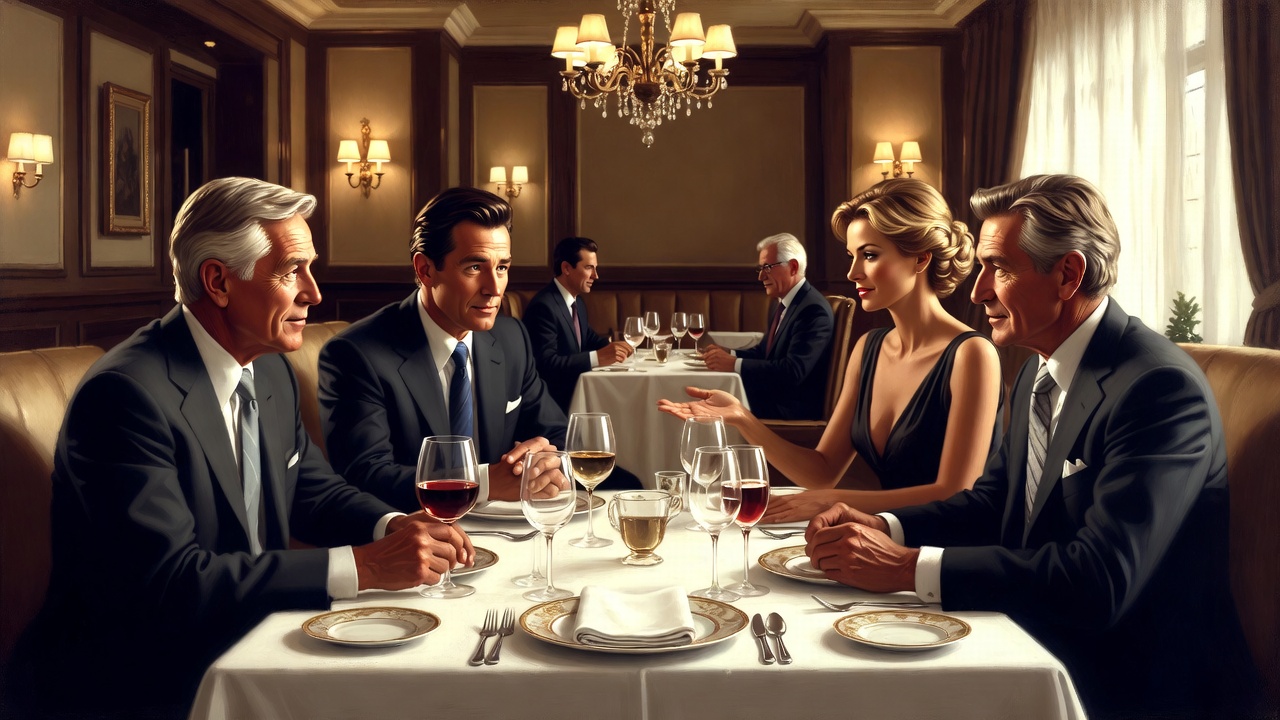
Business Lunch Etiquette: Rules of Conduct in a Restaurant
A business lunch is far more than just a meal—it's a negotiation where every gesture counts. You might have the best proposals in the world, but if you're holding your knife incorrectly or discussing prices with your mouth full, that's exactly what your partner will remember. In Tashkent, where business culture is rapidly evolving and blending with international standards, mastering table etiquette has become a competitive advantage. This article breaks down practical rules that actually work during restaurant negotiations.
Who Chooses the Restaurant and Why It Matters
Selecting the venue is the first—and most critical—mistake many meeting organizers make. You can't simply pick a trendy Instagram restaurant. The venue must align with your meeting's objectives.
The Golden Rule: The person initiating the meeting chooses the restaurant based on the guest's convenience, not their own preferences.
What to Consider When Choosing
- Noise level — if you need to conduct negotiations, avoid trendy venues with loud music. A private room or secluded area is ideal
- Service speed — in Tashkent, it's critical to account for longer preparation times during peak hours (12:30–14:00). For negotiations, aim for 12:00 or after 14:30
- Cuisine style — avoid dishes eaten with hands or with strong odors (garlic, spices). These distract from conversation and can damage your professional image
- Check the menu in advance — business etiquette dictates calling the restaurant a day ahead to confirm dish availability, especially if your guest has dietary restrictions (vegetarian, halal)
Find and compare suitable Tashkent venues by format, capacity, and service level on HORIX — the directory of business spaces in Uzbekistan.
Who Pays and How to Handle It Tactfully
This creates the most awkwardness. The rule is simple but crucial to know.
The meeting initiator pays. If you've invited your partner to meet, you cover the bill. The exception is equal-level meetings (for example, negotiations between two companies of similar standing), where you can offer to split the check.
How to Avoid an Awkward Moment at the Register
- Coordinate with the restaurant in advance — notify them that the bill should be presented to you, not placed on the center of the table
- Corporate card — the most civilized approach. Hand the card to the server once at the beginning of lunch
- Never present the bill to your guest directly at the table during negotiations—it looks like you're rushing them or revealing service costs
- If your guest insists on splitting the bill — agree, but don't show surprise or offense
How to Order Correctly
The order of ordering is often overlooked, yet it sets the tone for the entire meeting.
The guest orders first, then the host. While not mandatory, this demonstrates respect. If your guest is hesitant, offer: "May I recommend...?"
Practical Ordering Tips
- Don't order the most expensive dish if your guest chose something mid-range—it comes across as a status display
- Avoid alcoholic drinks at first — start with water, then decide on alcohol
- When ordering wine, ask the sommelier or server for a recommendation rather than naming one from memory (Tashkent's local wine selection is limited)
- Don't comment on your guest's calorie choices — if they select a heavy dish, that's their decision
- Tell your server: "Please bring our dishes so we can eat simultaneously"—this prevents awkward pauses
Your Phone at the Table: When It's Acceptable
There's no middle ground here. A phone on the table during a business meeting is a sign of disrespect.
- Exception 1: You're expecting a critically important call (for example, from a client in another time zone). Warn your guest in advance: "I apologize, but I may receive a call from Moscow—I'll need to step away for a moment"
- Exception 2: You're meeting with three or more participants and need to clarify something. Even then, place the phone at the edge of the table, not in your hands
- Taking photos of the menu or dishes — don't, even if you really want to. It looks like advertising or as if you've never been to a proper restaurant before
The 50/50 Rule: Spend 50% of lunch discussing business and 50% on personal matters. Don't spend the entire meal only on work, but avoid drifting into empty small talk either.
Alcohol at a Business Lunch: International and Local Norms
In Uzbekistan, attitudes toward alcohol at business meetings differ from Europe or the USA, and this is important to consider.
Local Norms in Tashkent
- If your guest is Muslim — don't offer alcohol at all. Wait for them to order if they choose to (many do at business meetings despite personal beliefs)
- If meeting with foreigners — they expect alcohol to be available. Offer wine with the main course, not with appetizers
- Beer at a business lunch — sends a weak signal in Tashkent. It looks too casual, even for informal meetings
- Vodka — if you're in a group where vodka is consumed, one toast in honor of your partner is standard. But no more than one glass before the main course
International Standards
In the USA and Europe, alcohol is often skipped entirely at business lunches or limited to one drink. In Russia and CIS countries, one or two glasses of wine are considered normal.
The Golden Rule: Drink half as much as you'd like and never more than your guest.
Table Behavior: Core Principles
- Eat slower than your guest — this allows you to talk and listen more
- Place napkin on your lap immediately, don't wait
- Knife on the right, fork on the left — basic etiquette, but often forgotten in Tashkent
- Never leave your plate half-empty — it looks like criticism of the dish or disrespect for your host
- Compliments to the chef are acceptable, but don't gush about the food if you're in serious negotiations
Body language matters. An open posture (elbows not tucked in, hands visible), straight spine, and eye contact all signal confidence and honesty.
International Norms in Tashkent's Context
Tashkent is a city where business culture absorbs both Western and Eastern traditions.
- German and Scandinavian style (punctuality, directness) — appreciated in large corporations
- British style (formality, restraint) — works with conservative partners
- Asian style (respect for age and status, indirect refusals) — relevant when meeting with older local businessmen
- Post-Soviet style (firm handshake, directness over formality) — dominates in local mid-market business
Try to adapt your style to your partner rather than imposing one universal approach.
Frequently Asked Questions
What if you accidentally spill wine on the tablecloth or your guest? Apologize once immediately, summon the server with a gesture (don't shout), and continue the conversation as if nothing happened. Don't dwell on it or ask your guest for forgiveness multiple times—that will only amplify the awkwardness. The server will handle the tablecloth.
Can you leave the restaurant during lunch to take a call? Yes, if it's truly important. Tell your guest: "I apologize, I need to step out for two minutes"—and leave without explaining why. Return quickly and rejoin the conversation. If the call will take longer than 5 minutes, postpone it.