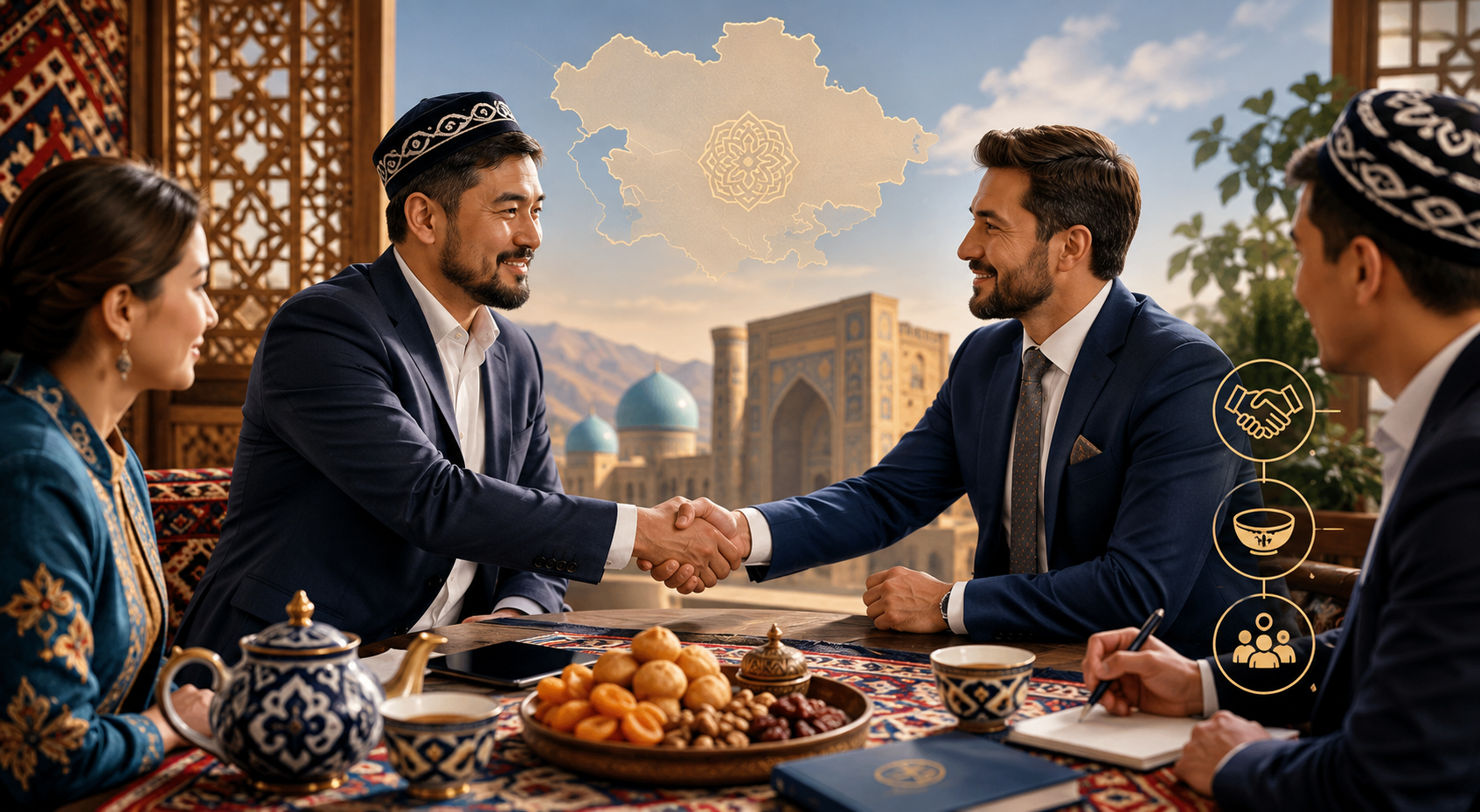
Western business is built on numbers, slides, and legal contracts. Central Asian business is built on trust, reputation, and knowing when to stay silent. Arriving in Tashkent with a PowerPoint deck and expecting a quick decision means you don't understand how things work here.
This doesn't mean local business is inefficient. It means it operates by different logic. And those who understand it close deals faster than those who push numbers.
Relationships Trump Terms
First and foremost: in Central Asia, people buy the person first, then the offer.
No one will sign a contract with someone they don't trust—no matter how favorable the terms. Before discussing business, you'll be studied: who you are, where you're from, who recommended you, how you behave at the table, how you treat people around you.
This is why the first meeting is rarely a working session. It's an introduction. Conversation about family, about the city, about life. Don't rush into business matters—it's perceived as disrespectful or, worse, greedy.
Practical tip: Invest time in building relationships before negotiations. One shared dinner can be worth more than three formal meetings.
Tea is More Than Just a Beverage
If you're offered tea—that's a good sign. It's an invitation to slow down and be a guest. You shouldn't refuse, even if you don't want to drink.
The tea ceremony in a business context serves an important function: it reduces tension, creates a pause, and signals that the host is willing to give you their time. In Uzbek culture, rushing is a sign of disrespect toward your conversation partner.
Note: the cup is never filled completely. This is tradition—so the guest will ask the host for more, and the conversation continues. A full cup means "drink up and leave."
Practical tip: Don't look at your phone during tea. Be fully present in the conversation—people notice and value this.
Hierarchy Decides Everything
Central Asian business is deeply hierarchical. Decisions are made at the top—and only at the top. You can technically reach an agreement with a mid-level manager, but it won't lead anywhere until the person with real authority approves it.
This is why reaching the right level is crucial from the start. If you're meeting with someone who isn't the decision-maker, the meeting likely won't lead anywhere. This isn't arrogance—it's how the system works.
The senior person is always greeted first. At the table, they sit at the head or opposite the door. They're addressed with respect—and people watch their reaction, even when someone else is speaking.
Practical tip: Before meeting, find out who actually makes decisions. And try to ensure that your side is represented by someone of comparable status.
Silence Isn't a Pause—It's an Answer
In Western negotiations, silence is often seen as awkwardness to be filled. In Central Asia, it's different. A pause can mean reflection, respect for what was said, or a signal that the topic is closed.
Don't rush to fill the silence. Don't repeat your proposal twice in a row—it looks like pressure. Give your counterpart time to process the information.
Also, direct refusal is rare in this culture. "We'll see," "I need to think about it," "that's interesting, but..." often mean "no." Reading between the lines here is more important than the ability to persuade.
Practical tip: If there's no concrete next step after the meeting, the answer is probably no. Clarify gently—don't push.
Food as a Negotiation Tool
A shared meal in Central Asia isn't just lunch. It's a ritual of trust. Inviting someone to your table means accepting them. Refusing to offer food is an insult.
Plov at a business dinner is no accident. It's a dish that Uzbek culture reserves for important guests and special occasions. If you're invited for plov—that's a sign of respect, not just food.
Business is discussed cautiously at meals, never bluntly. First comes conversation, atmosphere, getting to know each other. The business topic surfaces naturally once contact is established. Jumping straight to numbers at the table is a serious mistake.
Practical tip: When hosting Uzbek partners, choose a restaurant with Uzbek or Eastern cuisine. This alone signals respect for their culture. Find the right place on Horix.uz.
Gifts and Gestures
A small gift at the first meeting is good etiquette. It's not a bribe or an attempt to buy favor—it's a gesture of attention. Fruit, sweets, quality tea—all appropriate. Alcohol—use caution, as many partners observe Muslim traditions.
When receiving a gift, don't open it immediately in front of the giver—it's considered impolite. Thank them and set it aside.
Never pass anything with your left hand—it's disrespectful in Islamic culture. Both hands or your right hand—that's correct.
Patience as a Competitive Advantage
Deals here mature slowly. A decision that takes a week in Western business might take months here. This isn't stalling or disrespect—it's the pace at which trust works.
Those who rush lose. Those who stay in touch, attend events, take interest in the partner's business—they ultimately get what they came for.
Central Asia is a region where long-term relationships are valued over short-term profit. One reliable partner here is worth ten one-off deals.
The Quick Takeaway
| What Works | What Doesn't |
|---|---|
| Personal introduction before negotiations | Cold pitch without introduction |
| Respect for hierarchy | Negotiations with the wrong level |
| Patience and pauses | Pressure and deadlines |
| Shared meals | Refusing hospitality |
| Referral from a mutual acquaintance | Showing up unannounced |
| Gift and attention to detail | Rushing and formality |
Central Asian business culture is not a barrier—it's an advantage for those who understand it. Trust, a handshake, and reputation still matter here. In a world that's become digitized and impersonal, that's rare—and valuable.
Looking for the right place for a business meeting in Tashkent? On Horix.uz—the best restaurants and venues for negotiations, business breakfasts, and corporate dinners.