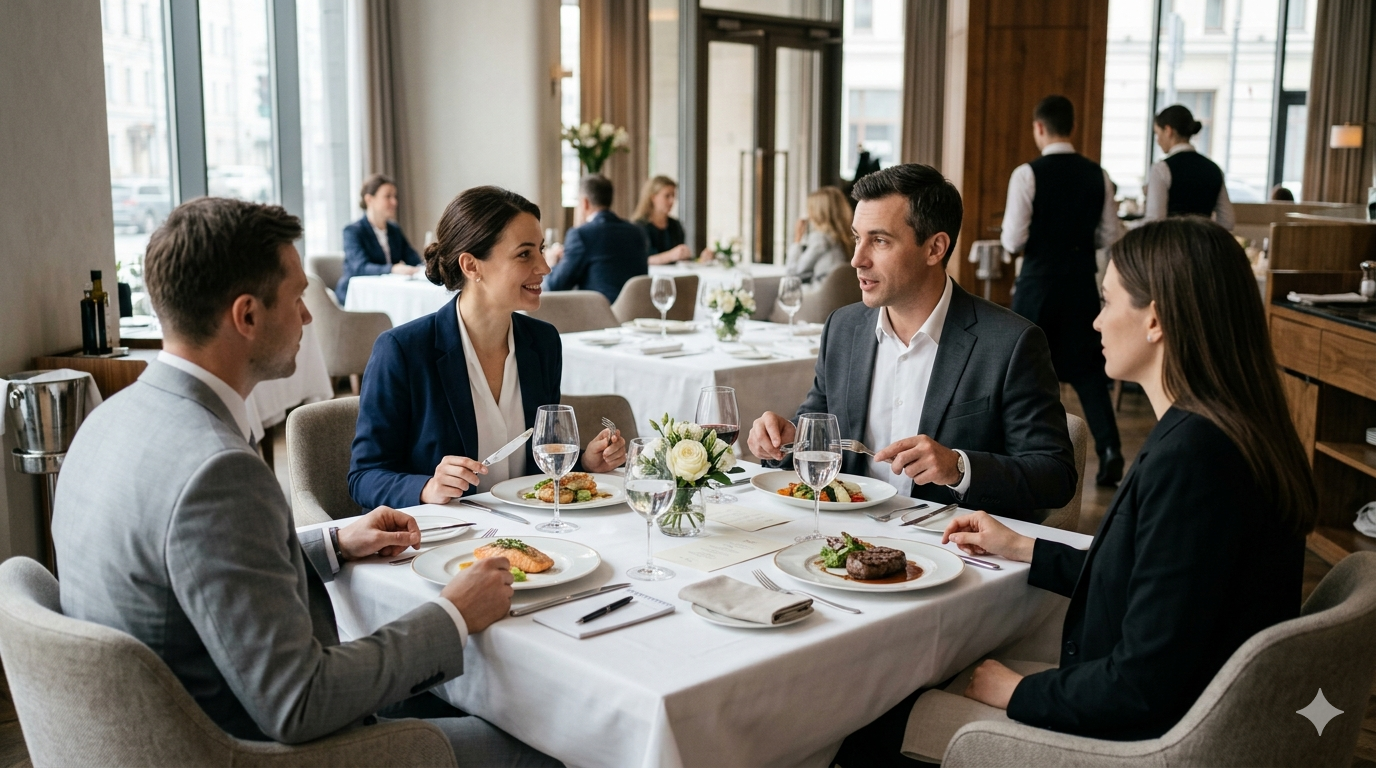
Business Lunch or Business Dinner: How to Choose the Right Time
When you schedule a meeting with a partner, client, or investor, the time of day isn't just logistics. It's psychology, etiquette, and strategy all at once. A business lunch creates one atmosphere, a business dinner creates an entirely different one. And you need to choose correctly—otherwise, you risk undermining negotiations at a stage when everything is already agreed upon. In Tashkent, where business culture is rapidly evolving and absorbing both Soviet traditions and global trends, this difference is particularly noticeable.
The Psychology of a Business Lunch
A business lunch is a format for decision-making. The meeting takes place during the day when the brain is most active, when energy peaks, and attention is sharp. People process information faster, recall contract details more easily, and discuss technical issues more readily.
The lunch format gives the meeting a business rhythm. You sit down, speak for 45–60 minutes, eat, then speak again. It's structured. There's less alcohol—typically one or two beverages at most, perhaps a non-alcoholic drink. The mind remains clear, and decisions are made soberly.
Psychological effect: the meeting participant perceives you as a serious partner focused on business, not entertainment. Lunch is about respecting your counterpart's time.
In Tashkent, the lunch break traditionally falls between 12:00–14:00. If you schedule a meeting at 12:30 or 13:00, you're tapping into the natural rhythm of Uzbek companies' workday.
The Psychology of a Business Dinner
Dinner is a format for building relationships. Here, the meeting takes on a different meaning. The day has ended, deadlines are postponed, and the atmosphere relaxes. People talk more about themselves, share experiences, and discuss not just the contract but also vision, business dreams, and concerns.
Dinner works to strengthen trust. When you sit together for three hours in the evening, discussing a project over wine or tea, a personal connection forms. It's not a transaction—it's the beginning of a partnership.
Psychological effect: the brain operates under less stress, but emotional openness is higher. This is why dinners often conclude already-negotiated deals or begin long-term relationships.
One downside: if the meeting is scheduled for 19:00 or 20:00, there's a risk that participants will be tired, especially if the day has been hectic. And alcohol is more present here, which requires extra attention to protocol.
Cultural Peculiarities in Uzbekistan
Uzbek business culture is a mix of tradition and modernity, and this is important to consider when choosing a meeting time.
Respect for daily routine: Uzbek companies maintain a strong habit of taking a lunch break. Many executives and specialists work from 9:00 to 18:00 with a full break from 12:30–14:00. If you schedule a meeting for 14:30, you're hitting the post-lunch slot when people have returned but energy is already declining.
Importance of personal relationships: In Uzbekistan, business connections are built on trust and familiarity. This means that dinners and informal meetings play a far greater role than in the West. A first contract might be signed after lunch, but long-term partnerships often begin with dinner at a table where there's time to talk calmly.
Hospitality: The Uzbek tradition of generous hospitality means that dinner is viewed as a more significant event. If you've invited a partner to dinner, it sends a signal: "I respect you and I'm ready to invest time and attention." Lunch is perceived more simply—it's standard business practice.
Religious and cultural nuances: Ramadan creates special conditions. Lunch during this period becomes a less convenient format for many Muslim partners, as they observe fasting. Dinner after sunset (iftar) becomes a natural meeting time. It's recommended to clarify meeting schedules during these periods.
When to Choose a Business Lunch
- New partnerships and early-stage negotiations. Lunch creates a serious, business-like atmosphere.
- When you need to discuss technical details, numbers, and deadlines. A clear mind during the day works in your favor.
- Meetings with representatives of international companies where the lunch format is standard. This shows you understand global business practices.
- If you have limited time. Lunch is strictly scheduled; dinner can stretch out.
- When you're meeting someone for the first time and want to assess their business qualities with a clear head.
Optimal time: 12:30–13:30. This is the middle of the lunch break in Tashkent, when people have already switched to meeting mode but energy is at its peak.
When to Choose a Business Dinner
- If preliminary agreement has already been reached, and the meeting is needed to cement the relationship.
- Long-term partnerships and investor searches. Dinner is a format where strategic alliances are born.
- When you want to get to know your partner more deeply—their vision, ambitions, work style, and values.
- Meetings with government and municipal officials, where business dinners are a recognized format for cooperation.
- Corporate holidays and celebrations that transition into business networking.
- Meetings with foreign partners from countries where dinner is the primary business format (many Middle Eastern, European, and American countries).
Optimal time: 19:00–20:00. This gives people time to finish their workday, change if needed, and arrive without rushing.
Practical Tips for Tashkent
1. Clarify your partner's preferences. If you're meeting someone you don't know well, simply ask: "Would you prefer to meet for lunch or dinner?" This will show your attentiveness and thoughtfulness.
2. Choose a venue that suits the format. For a business lunch, modern restaurants with quick service and a clear menu structure work well—for example, establishments offering fixed lunch options. For dinner, choose places with atmosphere where you can talk unhurriedly: rooftop cafes, cozy restaurants in central Tashkent, private dining rooms.
3. Plan time with a buffer. Lunch—1.5 hours. Dinner—2.5–3 hours. This allows you and your partner to feel comfortable rather than rushed.
4. Consider seasonality and weather. A summer afternoon in Tashkent can be exhausting. Autumn and spring are ideal seasons for terrace dinners. In winter, lunch might be preferable since evenings are cold.
5. Reserve your space in advance. Good Tashkent restaurants fill up quickly. A reservation a day or two ahead guarantees you a comfortable spot and staff attention.
You can find and compare Tashkent venues by filters (capacity, format, price, private zones availability) on HORIX—a directory of business spaces in Uzbekistan. It features restaurants, cafes, and conference halls suitable for business meetings of any format.
Frequently Asked Questions
Can you hold a business lunch at a cafe instead of a restaurant? Yes, if the cafe offers quality food, quick service, and a calm atmosphere. For lunch, the formality of the establishment matters less than for dinner. The main thing is that conversation is easy and food is served without delays. Tashkent has plenty of good cafes in the city center that are perfect for business lunches.
What if a partner suggests a time that's inconvenient for me? Be honest about it and offer an alternative with an explanation. For example: "Thank you for the suggestion! I have another meeting at 14:00. Could we meet at 13:00 or, if you prefer evenings, at 19:30?" This demonstrates flexibility and respect.
Does the choice of time affect negotiation results? Yes, it does, but not decisively. The right time creates a favorable backdrop: a clear mind at lunch, trust at dinner. However, 80% of a meeting's success depends on preparation, your offer, and the personal qualities of participants. Time is 20%, but sometimes those 20% are critical.