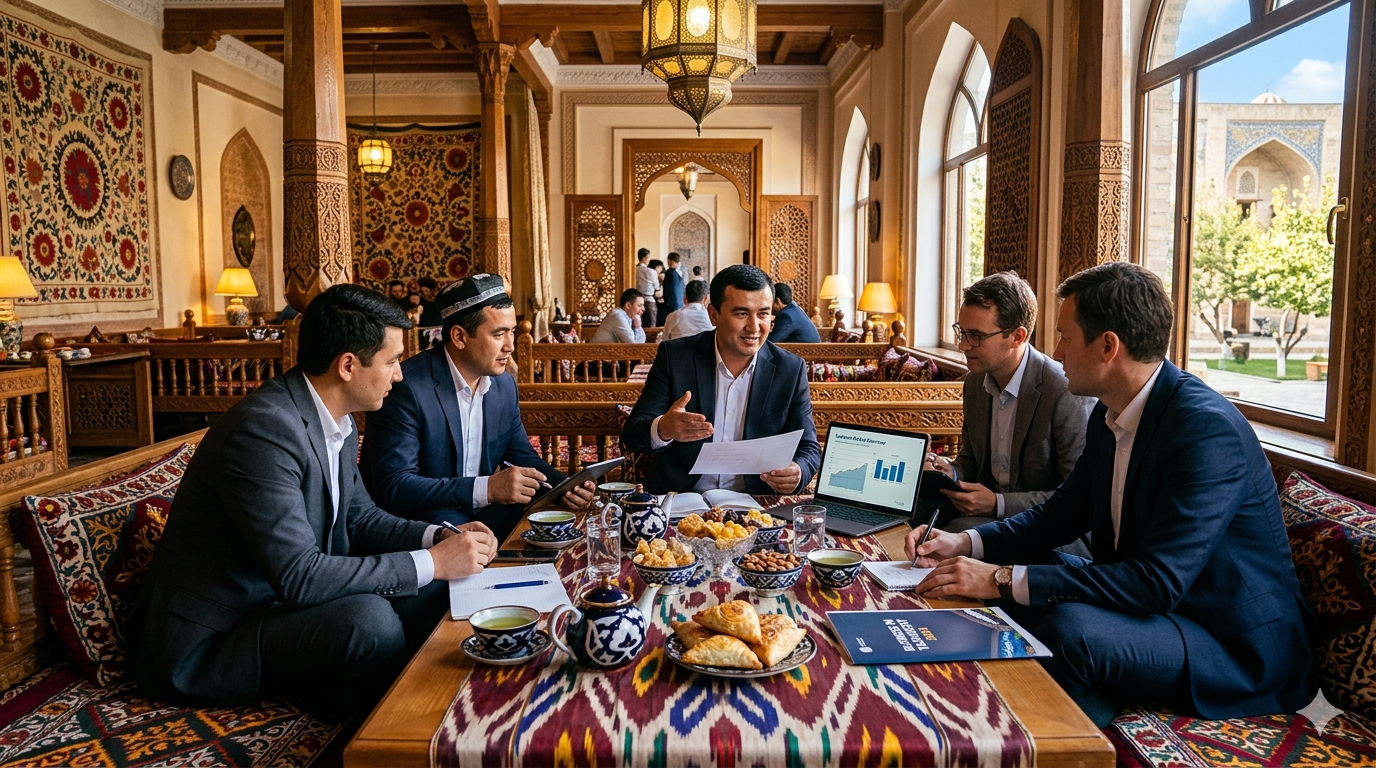
Tashkent Teahouses for Business Meetings: Tradition and Commerce
When negotiations drag on and the formality of conference rooms weighs heavy on the shoulders, Tashkent's savvy business people head to a teahouse. It's not just a restaurant serving Oriental cuisine — it's a space where serious business has been conducted for centuries. Here, the psychology of place works its magic: low divans, tea, soft light filtering through ayvan screens. People inevitably become calmer, more open, more ready for dialogue. Businesspeople know this secret. Trendy office suites pale in comparison because negotiations in an Uzbek teahouse follow a completely different rhythm.
Why a Teahouse Beats a Conference Room
The psychological dimension plays the leading role here. In a teahouse, there's no negotiation table dividing the two sides. No mirror glass on the walls. No presentation screen distracting from genuine conversation. Instead, there are soft cushions, steaming cups of tea in traditional bowls, familiar sights that every Uzbek knows — and suddenly, your client is at ease.
A concrete example: A Russian contractor was initially skeptical about meeting in a teahouse instead of an office. But after an hour in an ayvan with plov and green tea, he signed an agreement that had been under discussion for months. The atmosphere did the trick.
A teahouse also demonstrates respect for your partner's culture. You bring a foreign investor there for a reason: you're showcasing Uzbekistan at its best, inviting them to immerse themselves in the context, to feel its authenticity. This approach often works better than an impressive office downtown.
Ayvans: Privacy the Uzbek Way
An ayvan is a semi-enclosed space and a typical feature of Tashkent's teahouses. It's not a separate room, but it's not the common hall either. You see other guests, hear the hum of life, yet you're in your own little cocoon.
For negotiations, this is ideal:
- Privacy without isolation. You're not locked away in an office, yet you're not sitting among the crowd
- Natural sound dampening. Soft cushions, fabrics, high-backed divans absorb sound
- Comfort. Low tables and reclining positions — people instinctively relax, lowering their defensive barriers
- Symbolism. The ayvan is a historical symbol of hospitality and trust
Large Tashkent teahouses (in areas like Chorsu or the New Quarters) offer ayvans accommodating 4 to 15 people. For small talks between two parties, one divan with a table suffices. For product presentations or discussions involving larger groups, several adjacent ayvans can be arranged.
Cultural Context: The Teahouse in Uzbekistan's Life
A teahouse is more than just an establishment; it's a social institution. Here, men arrange their daughters' marriages, negotiate land deals, resolve conflicts. Historically, the teahouse was a place where every voice was heard, where hierarchy softened around a shared cup of tea.
When you hold a meeting in a teahouse, you're automatically stepping into this cultural context. Your client, partner, or contractor understands: here, people speak from the heart, without the theater of the office. This builds trust.
For foreign businesspeople, this moment is especially significant. They experience authentic Uzbekistan, immersing themselves in the culture not as tourists but as respected guests. Such impressions often become the deciding factor when choosing a partner.
Tea as a Negotiation Tool
In Eastern culture, tea is more than just a beverage — it's a language of communication. The brewing, pouring, and drinking process has its own rhythm that slows down negotiations. And that's a good thing.
Here's how it works in practice:
- A pause for thought. While tea is being poured and cools, your partner has time to consider your proposal without feeling pressured
- Regular breaks. Every 10–15 minutes, there's silence, a sip of tea, relaxation. The mind processes information better
- The symbolism of hospitality. Pouring tea for a guest signals respect and reminds them that you're aiming for dialogue, not pressure
In a Tashkent teahouse, you'll be served green tea (from Kokand or Fergana), black tea with cinnamon, rosehip, or tulpa (especially in winter). The choice of tea is part of the conversation itself. "What would you prefer?" — and your partner feels their opinion matters.
Experienced Tashkent business people deliberately conduct negotiations over tea because they know: it slows things down, allows time for reflection, and softens the atmosphere.
Practical Tips for Organizing a Meeting
Timing: Best from 10:00 to 12:00 or 15:00 to 17:00. Teahouses are crowded during lunch and dinner hours.
Reserving space: Call ahead to confirm ayvan availability at your desired time. Large teahouses accept group reservations.
Food: Order plov, samsa, lagman, or shorpa. This matters — an empty teahouse without food looks odd. Food shouldn't be the meeting's focus, but its presence creates the right environment.
Gadgets: A teahouse isn't the place for projectors and screens. If you need a presentation, take a break, step into a separate room, or use a tablet for two.
To compare and select the right Tashkent teahouse for your business meeting, visit HORIX — Uzbekistan's directory of business venues. Filter by capacity, format (open ayvans or private rooms), and location to ensure your meeting goes smoothly.
Frequently Asked Questions
Can foreigners hold meetings in a teahouse, or is it just for Uzbeks? Foreigners respond very positively to meetings in traditional Tashkent teahouses. It demonstrates cultural hospitality and often becomes a pleasant bonus to the business conversation. The key is explaining to your guest that this isn't a tourist attraction but a genuine place of business.
Do I need to reserve an ayvan in advance? For weekday meetings with 2–4 people, a reservation isn't essential, but for larger groups (more than 6 people) or during peak times (midday, evenings on weekends), calling ahead is recommended. Central Tashkent's larger teahouses may not have available space on short notice.
How much time should I book? A standard business meeting takes 1.5–2 hours. This allows time for discussing terms, refreshments, and tea without rushing. For longer meetings (presentations, training), book for 3 hours and notify the teahouse in advance.