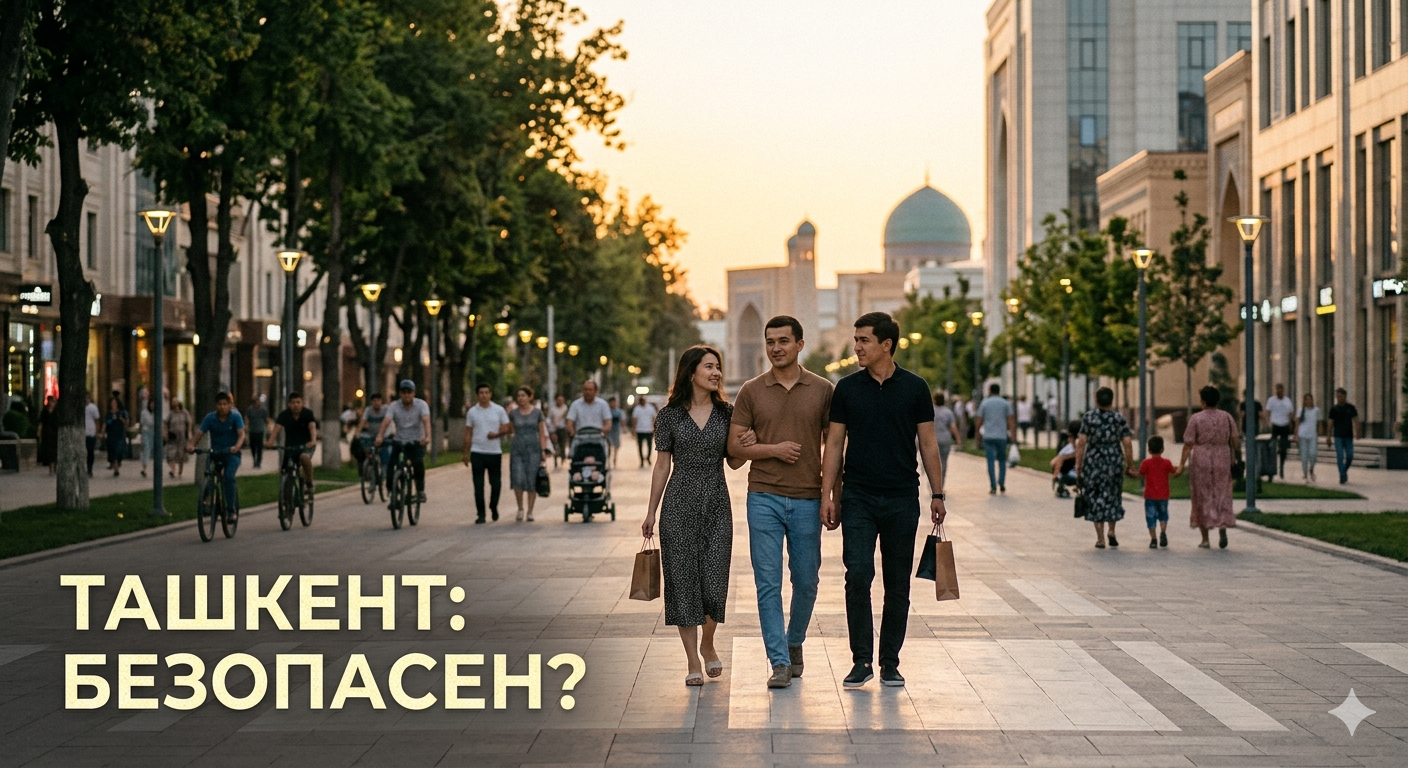
When people hear "Central Asia," stereotypes often come to mind: instability, poverty, danger. Tashkent shatters most of them — but an honest conversation is still worth having. Let's break down what's really worth considering and what's just myth.
Overall Safety Level
Tashkent is one of the safest cities in the region. According to many expats, it's safer than Moscow, Almaty, and most European capitals when it comes to street crime.
Reasons:
- Police presence is noticeable — especially in the center
- CCTV coverage is well-developed
- Culture of public behavior is quite reserved
- Low alcohol consumption (Muslim country)
Street theft, assaults, robbery — are rare. Cases exist, but compared to most major cities — minimal.
You can walk through the center at night with peace of mind. Women traveling alone feel relatively safe — though common sense still applies.
Minor Fraud and Everyday Risks
This is more real than physical danger.
Private taxi drivers (not Yandex Go) may inflate prices for foreigners. The solution is simple — use the app, prices are fixed.
Currency exchangers — some may shortchange you or give counterfeit bills. Change money at banks or trusted locations, count carefully when receiving it.
Minor market scams — possible, but rarely aggressive. Just bargain.
Road Safety
This is where you really need to be careful.
Drivers in Tashkent drive aggressively. Crosswalks aren't always respected, traffic lights are sometimes ignored. Accidents are common.
Tips:
- Cross the road only at underground passages or on green lights — and still look both ways
- When driving, stay alert and don't expect others to yield
- Extra caution on roads at night
This is perhaps the main real risk in Tashkent — not crime, but road conditions.
Food and Water
Tap water — is not drinkable. This isn't a legend, it's a fact. Drink bottled water, brush your teeth with it too — at least initially, until you adapt.
Street food — samsa, shashlik, lagman — is generally safe. Uzbek cuisine is traditionally heat-processed. Risk exists in very cheap places with poor hygiene — check the cleanliness of the location.
Stomach upset in the first weeks — is common for newcomers, the microflora is different. Bring familiar remedies with you.
Allergies and vegans — have it tougher: Uzbek cuisine is meat and fat-heavy, vegetarian options are scarce, but mid-level restaurants are starting to offer alternatives.
Healthcare
State medicine — is weak. You should only go to a state hospital in extreme cases.
Private clinics — are quite decent. A doctor's visit costs $15–50, serious procedures are cheaper than in Russia or Europe.
Good private networks: AKFA Medline, Mc Clinic, International SOS.
Insurance — make sure to arrange it before arrival or immediately upon landing. Especially if planning to stay long-term.
Pharmacies — on every corner, large selection, many medications sold without prescription.
Political Situation
Uzbekistan is a stable authoritarian country. After Karimov's death in 2016, under President Mirziyoyev, the country noticeably opened up: tourism, foreign business, reforms.
For a regular expat or tourist, politics doesn't create risks. But there are nuances:
- Don't criticize the government publicly — especially on social media.
- Photography of military objects, police stations, and some government buildings — is inadvisable
- Rallies and protests — avoid them, even as a spectator
For business: bureaucracy exists, corruption exists, but the situation is improving. Many foreign companies operate without problems.
Natural Risks
Tashkent is in a seismically active zone. Earthquakes occur — there was a destructive one in 1966. Small tremors are periodically recorded.
Construction in Tashkent accounts for this, modern buildings are erected with anti-seismic standards. No need to panic, but it's worth knowing.
Climate: summers reach +60°C. Heat stroke — is a real risk in July-August. Drink water, avoid midday sun, use protection.
Attitude Toward Foreigners
Uzbeks in general are hospitable and well-disposed toward foreigners. Tourists are respected here, travelers are traditionally welcomed warmly — it's part of the culture.
Russian speakers will find it easy to connect: Russian is widely spoken, especially among older generations and in business circles. Youth are shifting to Uzbek and English.
Expats from Europe, the US, and Asia are met with curiosity and respect. Racism as understood in the West — is rare, though stereotypes exist.
LGBTQ+: same-sex relationships are illegal in Uzbekistan. Open displays — carry risk. This is important to consider.
Conclusion: Is It Worth Going?
Yes — if you:
- Are looking for a safe city with a low cost of living
- Are willing to respect local traditions and laws
- Want to be in a growing economy with opportunities
Tashkent — isn't a perfect city. But it's honest: it offers a lot to those ready to adapt, and doesn't create unnecessary risks for those living sensibly.
The main rule: be careful on the road, drink bottled water, and don't get involved in politics. Everything else — is manageable.
Planning a business trip or move to Tashkent? On Horix.uz — find the best restaurants, meeting rooms, and venues in the city.